Music and art filled the West Edge Factory as WestFest made its debut, bringing live performances, art vendors and food trucks to the former industrial site that now serves as a creative community hub in Huntington’s west end.
“I want the community here to have an equal hand in creating this space and making it cool,” said Sassa Wilkes, the director of ReCreate Appalachia.
The first-year festival was held Saturday, April 18, with a $30 admission fee that allowed attendees to come and go freely between performances, vendors and community art projects. Proceeds benefited ReCreate Appalachia, a program that uses art, music and community culture to foster economic and social revitalization across West Virginia.
The event featured 19 bands, more than 20 art vendors and multiple community-focused activities, bringing people together across the property from morning into the evening. Organizers said they hope the festival continues to grow in the coming years.
“We want to support and uplift Appalachian artists,” Wilkes said. “We want to help people make money. We want to give them a space to create.”
Parking was available in several nearby areas, including a lot behind the building, a business across the train tracks and Westmoreland Park just across the street, where some attendees stepped away from the festival, with a few stopping to play on the swings.
Outside, food trucks drew steady lines as people gathered to eat and talk. Inside, others moved between performances, vendors and indoor spaces. The layout allowed guests to circulate freely throughout the venue, stepping in and out of different activities across the day.
The festival lineup featured a mix of regional and touring artists, with many performances rooted in folk, country and Americana styles. Cincinnati-based singer-songwriter Arlo McKinley was among the most recognizable names joined by acts including Buffalo Wabs & the Price Hill Hustle and Conrad Moore. The result was a blend of traditional and modern Appalachian-influenced music rooted in storytelling and high-energy live performances.
Hannah Marie Kelly, who performed alongside her husband and musical collaborator Gabriel Kelly, described her sound in her own words.
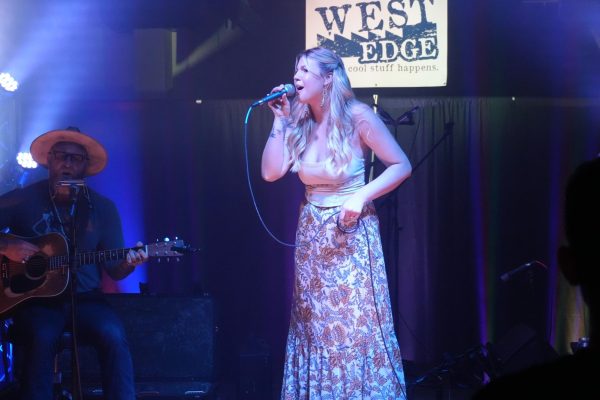
“I obviously love classic country. You can hear that influence strongly,” she said. “It’s kind of a throwback to ‘70s stoner country, like hillbilly, mixed with rock and roll, mixed with the blues, just all into one.”
Kelly said one of the songs she performed, “Yo Momma’s Muscadine,” carried particular meaning.
“That’s my favorite right now,” she said. “That’s about his mama, and I love her dearly.”
Gabriel said the song has taken on additional meaning following a recent loss.
“We actually just lost my mama in January,” he said. “It’s really special for us right now, and a beautiful way to carry on the memory of people. It’s nice that we get to sing about her every night.”
Kelly also spoke about her connection to the event and the space.
“Well, they asked us to come back,” she said. “We came last year … and the owner was just so nice. I love what they’re doing for the community, and I told them that no matter how big I’ll get, I’m always going to come back.”
Performers said festivals like WestFest allow artists to share space while building connections with other musicians.
“It’s kind of cool that, when you usually play shows, it’s just you as the act,” said Fabrizio, performer at the event, “but when you do a festival, you get to see other people play as well … and make connections, meet fellow artists and stuff.”
Fabrizio described his sound as rooted in country, blues and folk but with a darker influence.
“I would say very specifically Southern Gothic, definitely in the Americana realm,” he said.
Fabrizio said the crowd was engaged and responsive throughout his set.
“I thought it was great … a very, very energetic crowd, for sure,” he said.
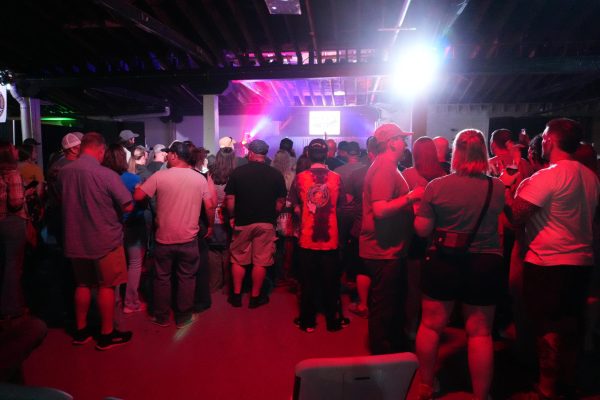
Inside the main hall, a large stage anchored the space as crowds filled chairs and tables or gathered near the front during performances. The room retained elements of the building’s industrial past, with wood flooring and exposed structural features visible throughout. A VIP section to the side of the stage provided additional seating while others stood on the open floor or browsed vendor tables between sets. The hall remained active into the evening.
Originally constructed in the 1930s for heater manufacturer A.F. Thompson and later operated by clothing manufacturer Corbin, the building has been redeveloped over more than a decade into a multi-use arts and performance space.
Along one wall, performers set up merchandise tables where attendees could buy shirts, music and other items while speaking directly with the artists. A guitar case on one of the tables for Arlo McKinley held naloxone, a medication used to reverse opioid overdoses, reflecting ongoing harm-reduction efforts in a region heavily impacted by the opioid crisis.
Deeper within the building, the festival featured a second performance area inside a recently renovated space known as the Black Box Theater, referred to as the “Rib Cage.” Audiences could enter the space through a black-curtained doorway on the upper level or by descending a staircase into the lower portion of the theater.
Inside, the space was divided between an upper balcony and a lower seating area arranged around a floor-level stage. The balcony overlooked the performance space below while the lower-level placed attendees closer to the stage.
The upper level featured repurposed church pews and whiskey barrels used as tables while the lower level included a mix of chairs, benches and what appeared to be old movie theater seats.
The stage was adorned with an oriental rug, and a full skeleton hung high along the back wall above it, adding to the room’s distinct character.
The venue still smelled of fresh paint with new materials and finishes visible throughout as packed crowds filled both levels during shows. The layout, however, came with some drawbacks as several attendees mentioned obstructed views from certain areas of the theater.
Between performances, attendees pointed to the setting and variety of activities as part of the festival’s draw.
“It feels like community,” Mandy Tee said. “It feels like you could be out on someone’s farm or in the woods just jamming out.”
Dakota Maddox said the space itself plays a major role in shaping the experience, pointing to its transformation from an unused factory into a place where artists thrive.
“They’ve now been able to turn a building that wasn’t being used for anything into something that allows people to come create,” Maddox said.
Maddox said the space carries a local, grassroots feel shaped by the people who have helped build it.
“It doesn’t feel cookie-cutter,” she said. “It feels pretty genuine and unique.”
Keith Bailey said events like WestFest help bring together different parts of the local arts community.
“I think having it all day allows it to be more accessible,” Bailey said. “Having the art vendors creates a good synergy for the community as a whole.”
Other festivalgoers said events like it help fill a void for musicians in the area.
“There aren’t enough places that provide live music in the community,” Mickey Wilson said. “There are a lot of talented artists who want to get their music out there, and this is a cool, intimate space that offers them a place to go.”
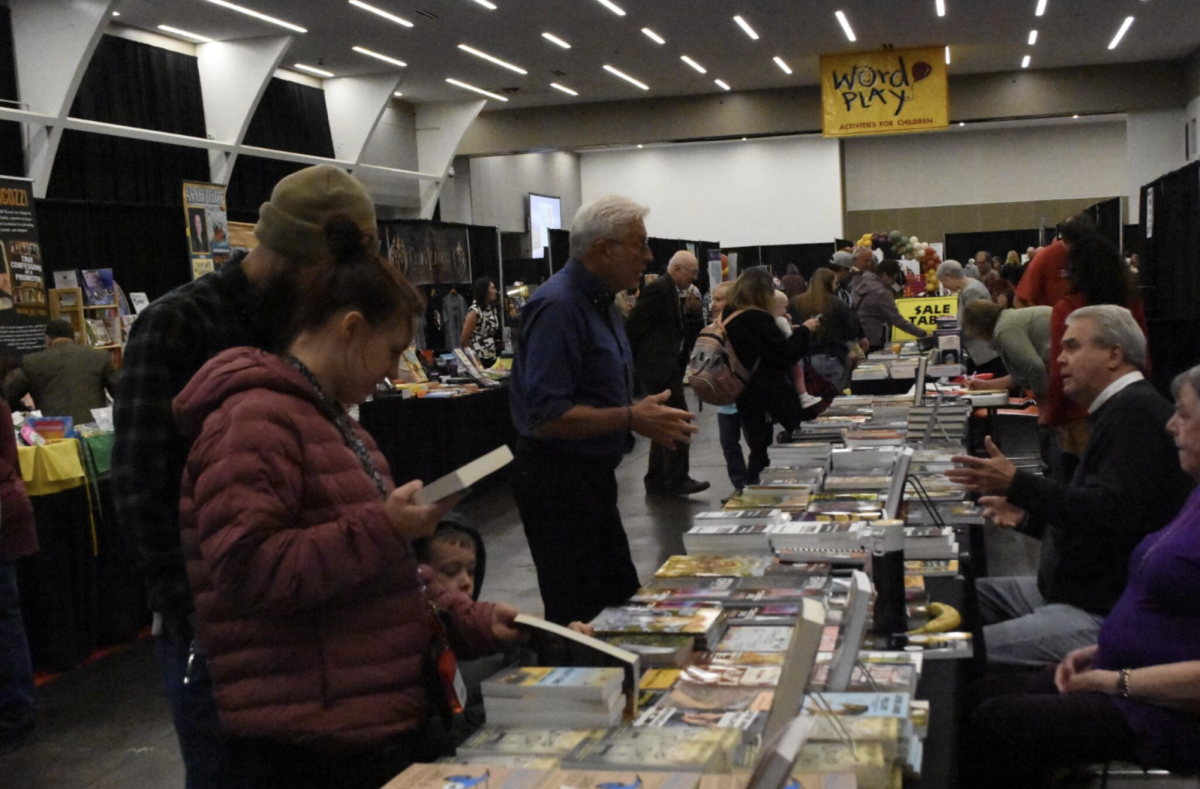
Vendor tables throughout the event featured paintings, prints, handmade crafts, jewelry and other items with attendees stopping to speak with artists and browse available work.
Vendors also pointed to the limited number of opportunities for local artists, making events like WestFest a welcome exception.
“There aren’t many opportunities like this,” said Renee Wilson, the operator of Renee’s Creations, where she sells wood-burned artwork and illustrated coloring books. “Unless you search for an event as an artist, you’re not going to find it.”
Wilson said she focuses on making her work accessible to a wide range of people attending events.
“My art has kind of an affordability about it. I use wood and tie dye to make art that anyone can buy,” she said. “I try to have something so everyone can leave an event with something.”
For Morgan Ross, the event brought steady crowds throughout the day. Her food truck, Sunshine Sliders, started in Florida before returning to West Virginia.
“We’re born and raised here,” she said.
Ross said business remained strong as attendees moved between performances and vendor areas.
“Business was booming. Crowd’s been great. Good vibes, super nice,” she said, nodding toward the artists inside. “It’s been really cool to see all the creative people here.”
Ross had a simple message for anyone considering attending.
“Come out. Have some fun. Enjoy local vendors, local artists and local food,” she said.
Throughout the venue, elements of ongoing art projects reflected the broader work taking place at West Edge Factory beyond the festival itself.
One of those projects, “Solidarity,” was displayed outside the Black Box Theater. Led by Wilkes in collaboration with the West Virginia Mine Wars Museum, the yearlong mural project features 12 portraits of key figures from the West Virginia Mine Wars, including Mother Jones, Frank Keeney and Sarah “Ma” Blizzard.
Wilkes said he designs each portrait digitally before it is printed, divided into sections and recreated by community members.
“The whole point of it is it’s called “Solidarity” because we want to paint it in solidarity with each other right now and learn about our labor history in this state,” he said.
Each portrait is broken into 108 individual squares, allowing contributors of all skill levels to take part in building the larger image.
Tee said she participated in the project at a previous community event where attendees painted individual sections that were later assembled into a larger piece.
“You can kind of see how things maybe don’t directly line up, but that’s community,” Tee said. “When you step back and look at it, you can still see the picture.”
She said the process allows people of all skill levels to contribute.
“No matter what your level of ability was, you can participate … That is community,” she said.
Wilkes said projects like “Solidarity” reflect the broader approach behind the work at West Edge Factory, where music, art and community participation intersect.
That same approach carried through WestFest as performances, vendors and collaborative spaces operated side by side throughout the day, allowing artists and attendees to share the space in different ways.
For Wilkes, the response to the first WestFest pointed toward future growth.
“It’s really, really awesome to see so many people here,” he said. “I’d love to have one every year. I’d love for it to get bigger and bigger.”
David Lozano can be contacted at [email protected]