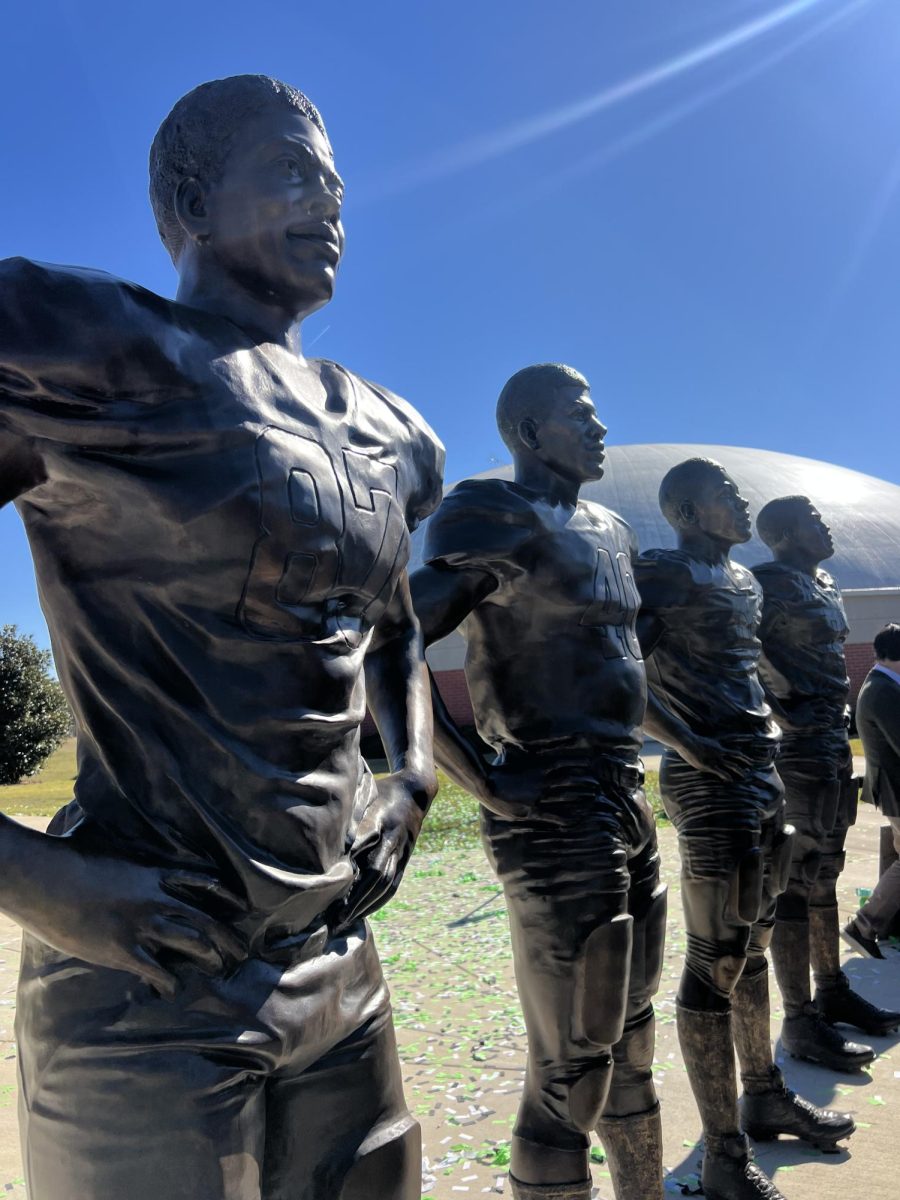
Remembering those lost remains a responsibility that forever defines Marshall football, speakers said at the annual Spring Fountain Ceremony.
“The fountain is here because we want to remember those who perished,” head football coach Tony Gibson said. “It is our responsibility to carry their story forward.”
The ceremony took place Saturday, April 11, in the Memorial Student Center plaza. Students, alumni and community members were met with warm weather and a light breeze as they honored the legacy of 75 people who died in the Southern Airways Flight 932 crash, a tragedy that continues to shape the university more than five decades later.
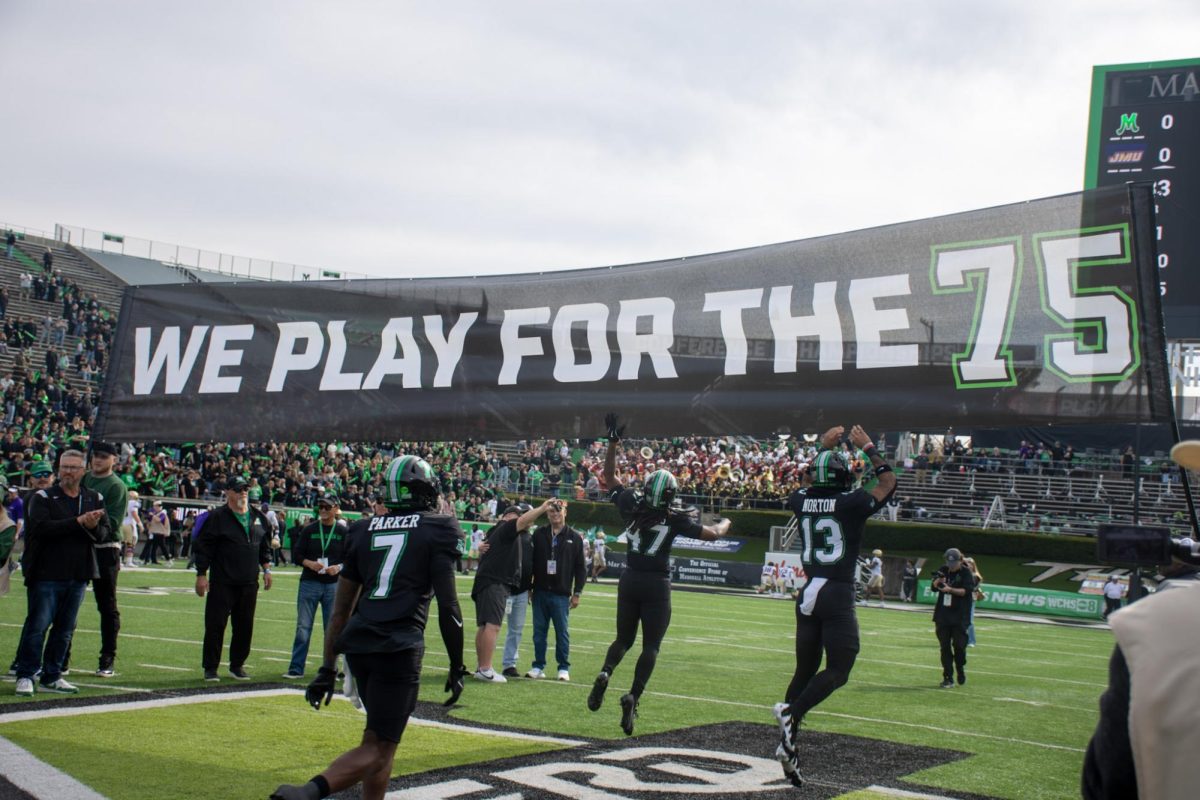
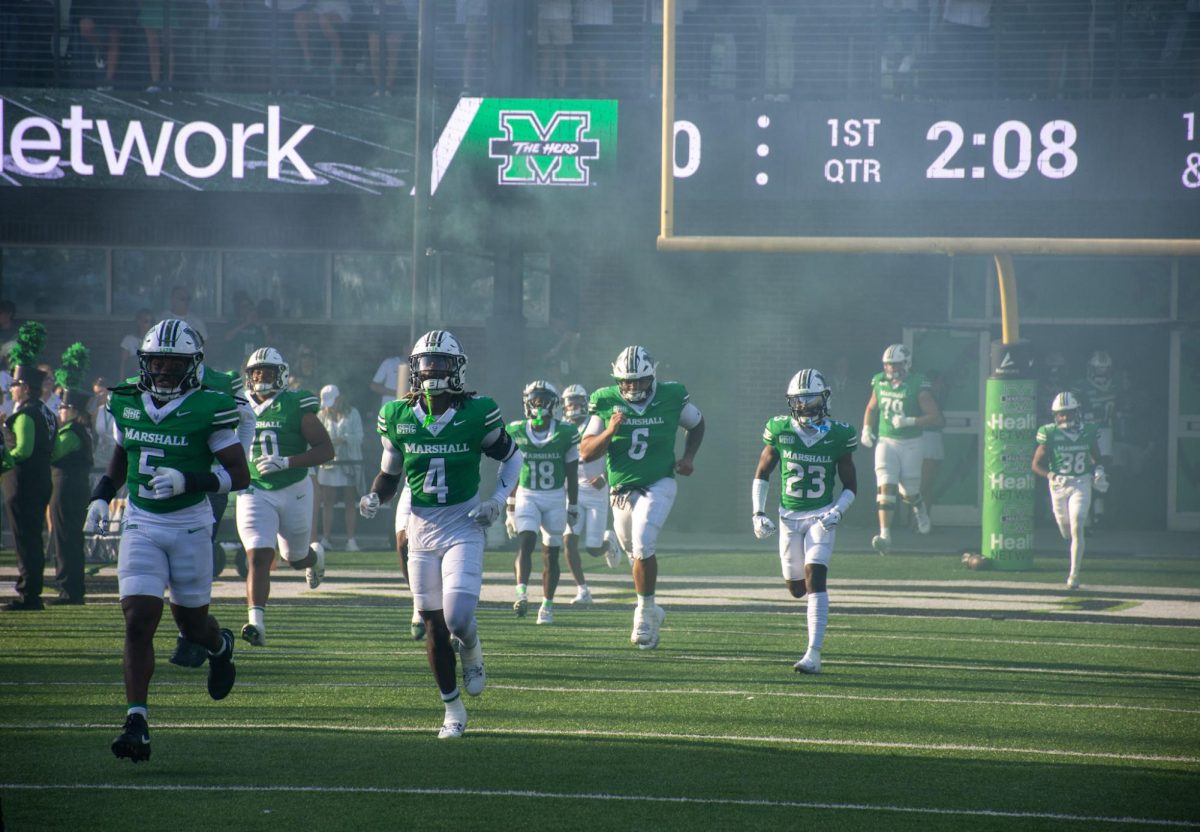
Held just hours before Marshall’s annual Green and White spring football game, the event connected the university’s past with the football team’s present and future.
Before the ceremony, Marshall’s football team made its way across campus alongside other student-athletes then surrounded the fountain to hear the event’s speakers.
One interaction in the crowd reflected how that legacy lives on. A man stopped to point out a vintage logo on a jacket, the same one worn by the 1971 Young Thundering Herd. He shared a photo of former coach Jack Lengyel signing a helmet bearing that emblem. He explained how the logo, created during the program’s rebuilding year, still carries meaning for the Marshall community today.
Gerald Harrison, the vice president and the director of athletics, pointed to the program’s evolution in the years after the tragedy, highlighting how both the university and its athletics programs have continued to grow.
“Marshall’s story has never been defined by the tragedy alone, but by what came next: resilience, courage and purpose,” Harrison said.
Marshall President Brad D. Smith attended the ceremony alongside members of the 1971 Young Thundering Herd, including keynote speaker David Walsh.
Walsh reflected on the uncertainty surrounding the program in 1971 when a group of young and largely inexperienced players was tasked with rebuilding Marshall Football in the wake of the tragedy.
“What are we going to do?” Walsh recalled asking in the days that followed.
He described a team brought together under difficult circumstances, where players were not only learning a new system, but also trying to understand the weight of what had been lost.
“There were a lot of unknowns,” Walsh said. “We didn’t know what this program was going to look like.”
Walsh said progress did not come quickly, but through small moments that gradually built confidence within the team.
“We were close,” he said. “We just kept working and trying to get better every day.”
Looking back, Walsh said the experience shaped not only the future of the program, but also the lives of those who were part of it.
“It wasn’t just about football,” Walsh said. “It was about being part of something bigger than ourselves.”
For many in attendance, that message resonated beyond the ceremony itself.
Marshall alumni Beth Pettry and Jesse Baldwin attended to support the community and take part in a tradition they had not previously experienced.
“I mean, I’m an alumnus, so just coming out to support the community,” Baldwin said.
Pettry emphasized the importance of maintaining traditions that preserve Marshall’s history.
“I think rituals and routines are a really good thing to keep history alive,” she said.
Both said the impact of the tragedy continues to extend beyond the university.
“It’s more respect,” Baldwin said. “There are people in this community whose parents died in this plane crash.”
Pettry said the connection remains deeply rooted across generations.
“If you’ve grown up in West Virginia and around Huntington, you know somebody that it has affected,” she said.
As the ceremony concluded, the fountain came back to life, drawing applause from the crowd and marking a quiet shift from reflection to renewal.
Rev. Steve Harvey framed the moment as one centered on hope and renewal.
“It represents new heart, new hope, new life,” he said.
David Lozano can be contacted at [email protected].