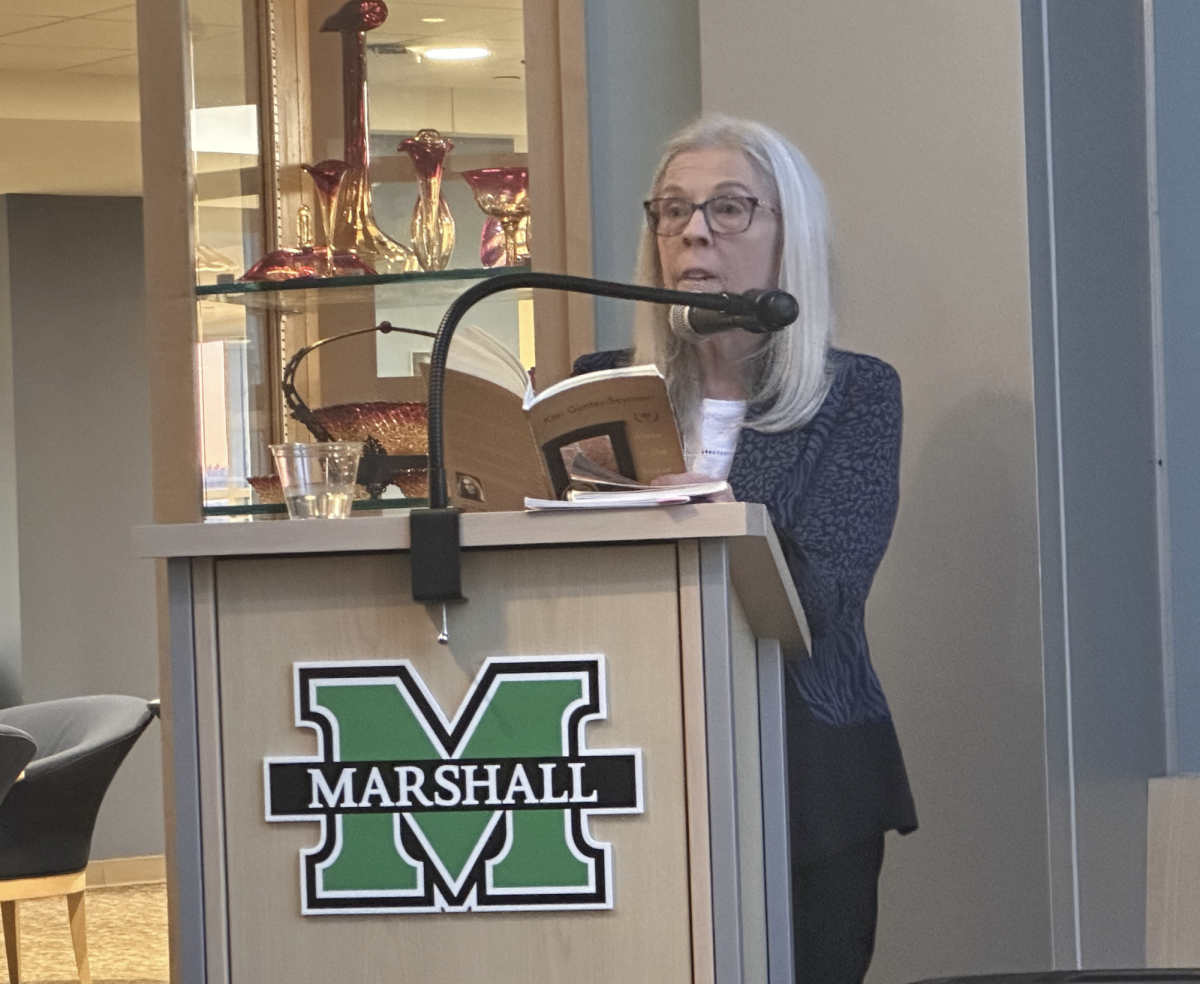
Global influences on the American Revolution aren’t discussed as often as they should be, said a professor from Johns Hopkins University during the last Amicus Curiae Lecture Series of the semester Tuesday, March 31.
“There is a kind of patriotic impetus for teaching U.S. history and sort of prioritizing it, and that makes sense, but I think we understand American history better if we have a sense of other places and comparisons,” said Sarah M.S. Pearsall, author and U.S. history professor at Johns Hopkins University. “I think it’s important for us to try to make those connections and think harder about them.”
This year marks the 250th anniversary of the Declaration of Independence, raising the topic of the lecture, “A World History of the American Revolution.”
“This lecture is about how to mark the semiquincentennial of the American Revolution and thinking about a global approach to it and how that changes our perspective on this really important founding event,” Pearsall said.
“I think it’s really important for people to think about the American Revolution and to confront it again,” she said. “It’s also important to appreciate that both the Declaration of Independence and the American Revolution come out of a wider world – a series of events, processes and dynamics that took place around the world – and that those events were influencing what happened in the 13 colonies.”
“Normally, we think of our own story that we know about and everything that happened here on American soil, but we don’t think about the impact of the larger world on making those things happen,” said Patricia Proctor, pre-law advisor and the founding director of the Simon Perry Center for Constitutional Democracy.
Pearsall explained how the events in other countries influenced the American Revolution, especially the revolution of the people in Kolkata, a city in West Bengal, India.
“We are thinking a lot about governments today, and they were thinking about them in Kolkata in the 1770s as well,” Pearsall said.
She talked about how soldiers in Kolkata were killing protesters, which is an issue still present in the world today.
“I think history gives us such an amazing perspective on our current events and controversies,” Pearsall said. “You see how a tyrant sends swarms of officers to a city, and they shoot at bystanders on the street. It really is clear that these are longstanding issues.”
She went on to explain how the public reacts to the same threats today.
“In 2026, resistance to tyranny takes on urgent force,” Pearsall said.
Amanda Arrowood can be contacted at [email protected].