Jeff Bills came into work at the Campus Barbershop at 7 a.m. Wednesday, Feb. 4, ready to call it quits only an hour later. For the first 120 minutes of his shift, not a single customer walked through the doors.
Bills, the owner of the barbershop located at 1455 4th Avenue in Huntington, West Virginia, said mornings normally bring a steady flow of students and faculty; however, the mounds of snow and stubborn ice transformed the bustling shop into a ghost town.
“I’ve been in business for 48 years cutting hair, and I’ve never seen it this bad,” Bills said. “Back in ‘93, we had 28 inches of snow, and nobody could get out, but now, I haven’t seen one person walking today, and I’ve been here three hours.”
The shop, normally open until 5 p.m., could not stay open due to electricity and overhead costs trumping the sales from haircuts, Bills said.
“There’s no sense in being here when the weather is like it is,” he said. “Nobody is out, and I don’t think anybody can come out.”
Besides assistance from a good samaritan in clearing snow from the parking lot, Bills said the weather left him isolated as he advised his employees to not risk the conditions.
“I have an employee who lives 30 miles away in Milton, and I made sure to tell him not to bother,” he said. “I just knew I could handle any business alone today.”
Bills said for small businesses, the storm was not just an inconvenience, but a certain financial hit.
“I mean, I still have bread and milk, but this is the slowest I’ve seen business in a long time,” he said. “Basically since COVID, and when it’s this slow, you’re losing money just by being open.”
In terms of the road conditions near the shop, Bills said despite the city of Huntington’s best efforts, there was simply too much ice and not enough parking for customers to venture to the shop.
While Bills faced a frozen street and an empty shop, other downtown businesses faced closures as well as adaptations to their operations throughout the storm.
Taylor Strickland Chambers, co-owner of Austin’s Homemade Ice Cream, said she had to make preventative decisions to protect her employees.
“When that snowstorm was coming in, we closed early that Saturday and then continued to close Sunday and Monday,” she said. “That was mainly for safety reasons for staff being able to get there and if other people are able to get downtown.”
Located at The Market on 3rd Avenue in Huntington, road conditions prevented many customers from reaching the ice cream shop. Online orders became a lifeline during closures, helping both morale and cash flow, Chambers said.
“Any day we’re closed is money we’re out,” she said. “We still have to pay staff, rent and bills, so it really inhibits our cash flow.”
Despite these challenges, Chambers said the business managed to maintain a steady flow of customers once reopened.
However, she said the downtown location of the shop does not allow for a drive-through, causing customers to either struggle through the icy conditions or to forgo an ice cream purchase altogether.
“People understandably don’t like to get out of their cars when it’s cold, and that hurts us a bit,” Chambers said. “When the ice builds up like this, it’s just impossible for people to drive in some aspects of it.”
In terms of community support during weather closures, Chambers said it is always appreciated when customers contribute, monetary or not.
“We have our online store, and you can purchase gift cards online as well,” she said. “Stop in and support as soon as the weather allows you, but also even liking and sharing our posts on social media is so valuable to us.”
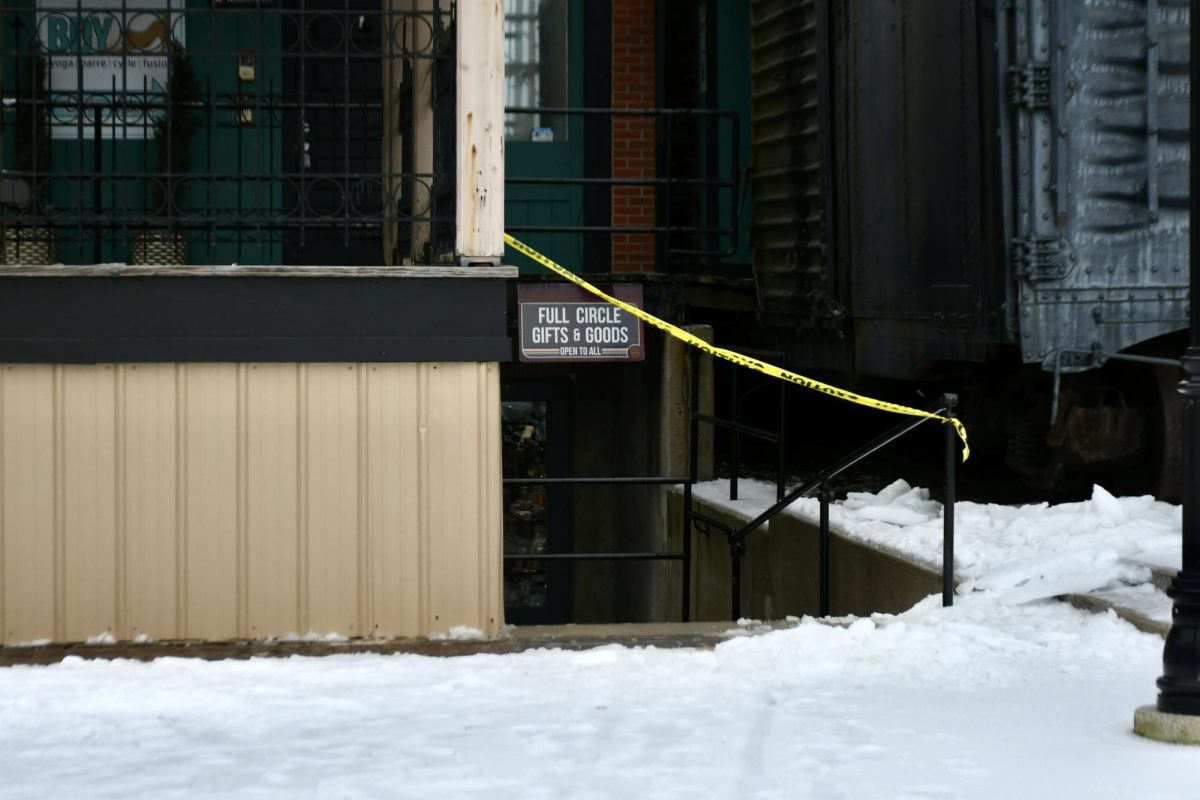
For Noelle Horsfield, the owner of Full Circle Gifts and Goods at Heritage Station, winter storms bring both physical and systemic obstacles.
Located on the lower level of the historic building, her shop is particularly vulnerable to foot traffic disruptions, she said.
“Heritage Station and our shop in particular were pretty inaccessible for the first couple of days after the ice storm,” Horsfield said. “It isn’t just the conditions at Heritage Station … If people don’t feel safe enough to get out and walk on the city sidewalks or drive on the streets, then they’re certainly not going to shop at small businesses.”
The interdependence of downtown businesses amplifies the impact of closures as Horsfield said customers often like to combine trips like picking up lunch or a coffee while grabbing a gift. When one shop closes, it can ripple across the neighborhood, she added.
Financially, lost days of business are unavoidable in severe weather events, and a few closures every winter are expected, Horsfield said.
However, prolonged closures have a tangible impact, particularly with seasonal merchandise that has limited to a short sales window, she said.
“We have a whole table of seasonal merchandise for Valentine’s Day that will now get a very short window in terms of us being able to sell it,” Horsfield said. “Had we known there would be weather-related closures, we would definitely have reduced the amount of Valentine’s Day items we ordered.”
Despite the early severity of the weather, Horsfield said oftentimes the usage of social media weather discussions sometimes shapes public perception of road conditions in a negative manner.
“I would like people to remember how the weather conditions are perceived and perhaps dramatized on social media affects how people behave in the real world,” she said. “There are days when social media posts have made it seem like the roads were terrible when it truly was just a bit of snow that ended up melting by early afternoon.”
From adjusting hours to leaning on online sales, one message remains the same: Winter weather conditions can be detrimental for small businesses.
Despite challenges like ice-clearing efforts, limited hours and community engagement, downtown entrepreneurs continuously find ways to weather the storm literally and figuratively.
For a more detailed look at this story complete with additional photos and audio visit: https://new.express.adobe.com/webpage/CUzcBfWH3lYQK
Kaitlyn Fleming can be contacted at [email protected].