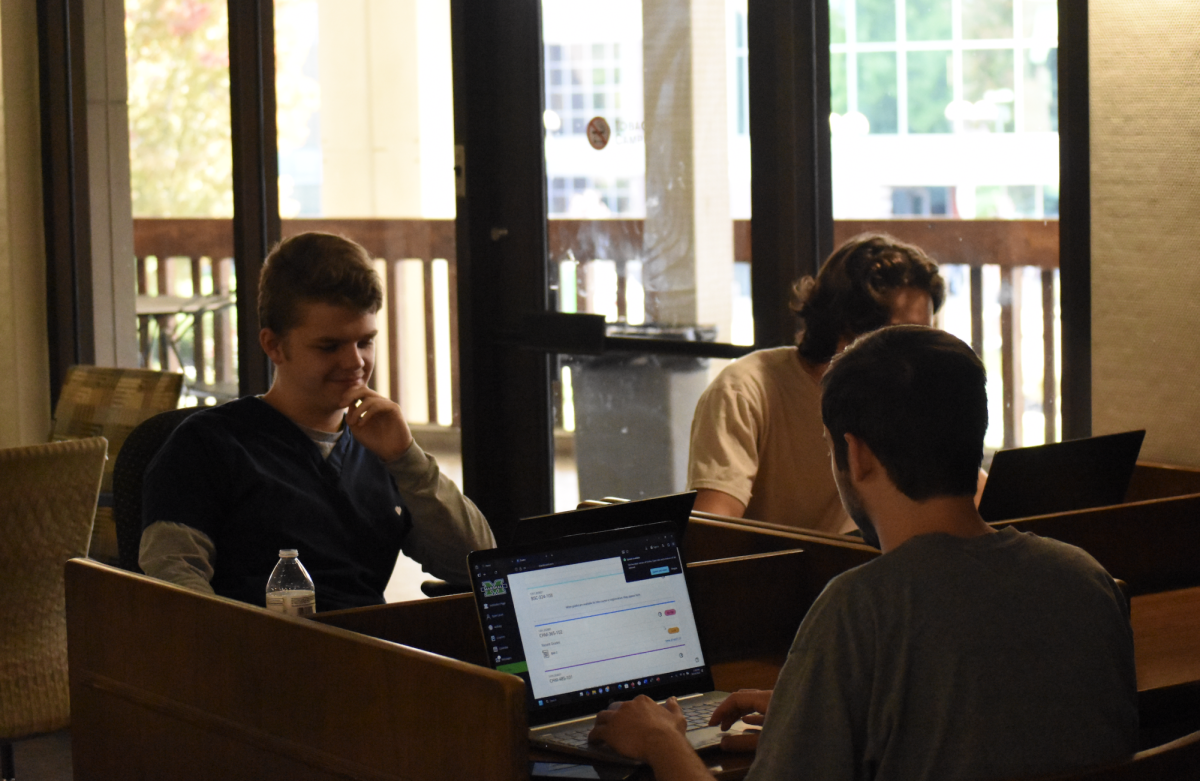
The college experience for many students is shaped by residence halls, hangout spaces and the constant presence of friends and classmates. Days are spent moving between classes, dining halls and dorm rooms only steps apart. However, for the university’s commuter students, that distance is much wider physically and emotionally. These students travel from home to campus daily, often balancing academic responsibilities with work, family and personal commitments outside the university setting.
Commuter students make up a good portion of Marshall’s population each semester. While reasons for commuting vary, the decision carries real effects on how students experience academic and social life.
For Katelyn Watts, a junior who drives about 45 minutes to campus four days a week, commuting provides stability and affordability.
“Personally and financially, it made more sense for me to live at home than on campus,” she said. Watts transferred to Marshall her sophomore year and chose to remain in her family home in Lincoln County rather than move to Huntington.
Cost is one of the most common factors that influences the decision to commute. Housing and meal plans can add thousands of dollars to the cost of college each year. For some students, avoiding those expenses allows them to continue their education without significant financial strain.
However, commuting also affects students’ ability to participate in campus life. Many campus events, club meetings and social activities occur in the evenings, long after commuter students have finished their classes and begun the drive home. The need to account for travel time and family responsibilities can make involvement difficult.
Watts acknowledges the timing of events has shaped her sense of connection to the university.
“I’m usually only on campus for my classes and don’t really participate in any clubs or anything,” she said. Since she leaves campus soon after classes end, she often feels separated from the type of community and connection that develops in shared spaces.
Scheduling can also become a challenge. Students who live on campus can return to their dorm rooms between classes, but commuters must find somewhere public to spend their time. Watts said long breaks in her schedule can feel especially draining.
“I often have big gaps and have to find places to sit because it’s impractical for me to go home,” Watts said. “I wish that they would offer more lounge areas for students who are on campus all day with nowhere to go.”
To support commuter students, Marshall operates the Commuter Lounge in the Memorial Student Center, which provides seating, charging stations and a consistent place to rest or study. Amongst many other resources, the university also offers off-campus housing resources, academic support services and student organization opportunities for on and off-campus students to utilize.
Even so, many commuter students say there is room for improvement. Parking remains a persistent concern, especially as enrollment and campus facility use increases. Still, commuter students remain deeply invested in their education and the university community, even if their connection isn’t linear to those who live on campus.
“I still feel like I’m part of Marshall,” Watts said. “My experience just looks different.”
Ella Hatfield can be contacted at [email protected].