From its humble beginnings performing in Old Main to being a major presence on campus with a Performing Arts Center, Marshall’s theatre program has grown significantly over the 100 years since its conception.
This year, the theatre program celebrates its 100th season of shows, though Jack Colclough, the director of the School of Theatre and Dance, said it’s unclear when the program actually started.
“We think we’re at 100 years judging from some of the archival photos we have and so forth,” Colclough said. “Theater in its earliest days was more of an intramural activity, probably reminiscent of what a high school would have, a drama club or a theater club.”
Colclough said colleges typically did not start offering theater majors until after World War II, with the G.I. Bill motivating veterans to attend college while wanting to perform in theatrical acts.
“Theater has been done in an academic sense; it’s only been what, 70 years doing it as a major, but it’s been part of higher education for well over 100 years,” Colclough said.
Colclough said theater is important to Marshall even if people usually do not think of it that way.
“I feel like sometimes we’re an afterthought, right? People coming to Marshall University, they’re thinking about the football team, or they’re thinking about the med school,” Colclough said. “Maybe I’m just sensitive to it, but the arts, we tend to be an afterthought.”
Colclough has been involved with the theatre program for 28 years starting in 1998. Since then, he said the size of the program has doubled.
“When I came to the program, the program was much smaller, and by smaller I mean we had 20, 22, 24 majors in the program,” Colclough said. “We’ve had as many as 60 in recent years. We hover in the 40s right now, so we’ve doubled the size of our program.”
Colclough said one of the most notable additions to the theatre program since his arrival was the establishment of the Theatre Etcetera program, where theater students develop a production together and then perform the show at different schools in the region.
“It’s really important for young people to have access to live theater to cultivate their imagination and to know that playing make pretend is a good thing,” Colclough said.
Colclough said one of the most important benefits of the Theatre Etcetera program is the skillset it provides to the students participating in it.
“You know, creative, collaborative thinking, working together to solve problems in a timely manner with unique solutions, and you have to do it all together,” Colclough said. “That’s tricky, and it is a tool set that theater does a really good job at developing that a lot of businesses and corporations and companies want their people to have.”
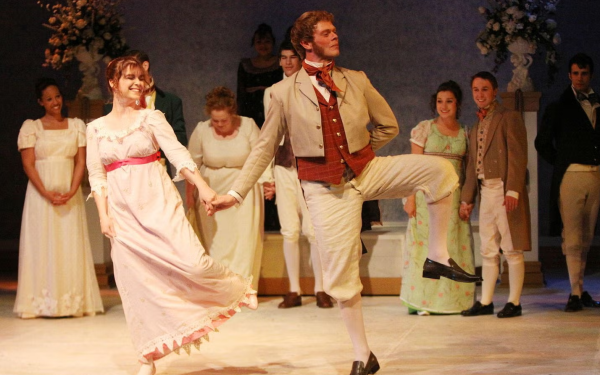
Colclough said one thing that has always remained the same has been the effort put in by faculty and staff to present their productions.
“One of the reasons why I’ve made this my home is that there has always been, during my time here, a real effort among the faculty and staff to present the finest work possible,” Colclough said. “I can’t tell you how many times that someone new comes to our theater and says after the show, ‘You know, I didn’t realize that college theater is this good.’”
One of the most significant challenges faced by Marshall Theatre throughout its history was continuing to operate during the COVID pandemic, Colclough said.
“When a lot of programs went 100% virtual, we didn’t. We met in masks, we adjusted our theater to accommodate what we needed to do, and it all had to happen very quickly,” Colclough said. “We even did a production, and we videoed it and livestreamed it. We weren’t unique in this; a lot of theater programs were doing this, but that took a lot to do.”
Performing in masks, overhauling seating configurations and going digital were among the changes that had to be made during the pandemic.
One particularly challenging moment came during a production of “Hay Fever” when Marshall University and the area surrounding it had a blackout, and the theater’s backup generators were not enough to power the lights and sound equipment.
“We made a quick decision that we would kind of buy some time to see if the lights would come back on and we could do the show,” Colclough said. “Well, they didn’t.”
Because an audience was already seated in the theater, Colclough had to come up with something to present to them. He said he knew one of the actors was a musician, so he asked the actor to go out with his guitar and play some of his own songs to the audience.
“I said, ‘You want an audience?’ and he was like, ‘Oh my God, yes,’ and he went out and played for an hour,” Colclough said. “He sang all of his songs. The audience loved it, and we added a performance the following Sunday.”
Colclough said the actor opened up the replacement production with more of his music because the audience loved it so much.
On top of teaching students skills in production and performance, Colclough said the theatre program teaches students about commitment and pulling their weight.
“If you’re on time, you’re late. If you’re 15 minutes early, you’re on time, and if you’re 15 minutes late, why bother?” Colclough said. “We are only as strong as our weakest link. If you don’t have your lines memorized, you let everyone else down. If you don’t finish your job in a timely manner, we’re all waiting on you.”
On top of working in a team and commitment, Colclough said theater students learn a variety of valuable practical skills during their time in the program.
“We are running a professional theater here. We have a scene shop with tools, saws, hammers, ladders, dangerous equipment,” Colclough said. “You have to learn and be proficient. We have a costume shop with sewing machines. A group of 15 to 20 kids coming in every semester who’ve never threaded a needle have to learn these skills.”
Colclough said the theatre program shares similar values with athletics, an analogy he said his students usually hate since he said many students are in theater because athletics did not work out for them.
“We share a lot of the similar values. Teamwork, dedication and working through the pain,” Colclough said. “Getting thrown into the deep end of the pool and having to swim, being able to understand what healthy competition is. Not everyone wins a trophy.”
Bailey Dore, actor and sophomore theater student, said the best part about the theatre department is the faculty.
“All of the professors are very supportive, but they also know how to let you struggle because a lot of times you want to go to their aid, but they don’t immediately, so you have to work through any issues you’re having,” Dore said. “It really helps communication skills and problem solving skills, things like that.”
Dore said the program was essential for helping her learn fundamental skills.
“It really helped me become a better public speaker because they work on voice classes, practicing and reading out monologues and stuff like that,” Dore said. “You have to make sure that you are speaking clearly and slowly, so they can understand you and feel the emotion.”
The best part of theater is the encouragement everyone provides to one another, Dore said.
“You can have a bad day in rehearsal and immediately four other people are gonna come, and they’re gonna start laughing with you and making you feel better,” Dore said. “It’s like we’re all one big family, and that’s one thing I love about the theatre department. When you’re having a problem, there’s always an ear you can talk to.”
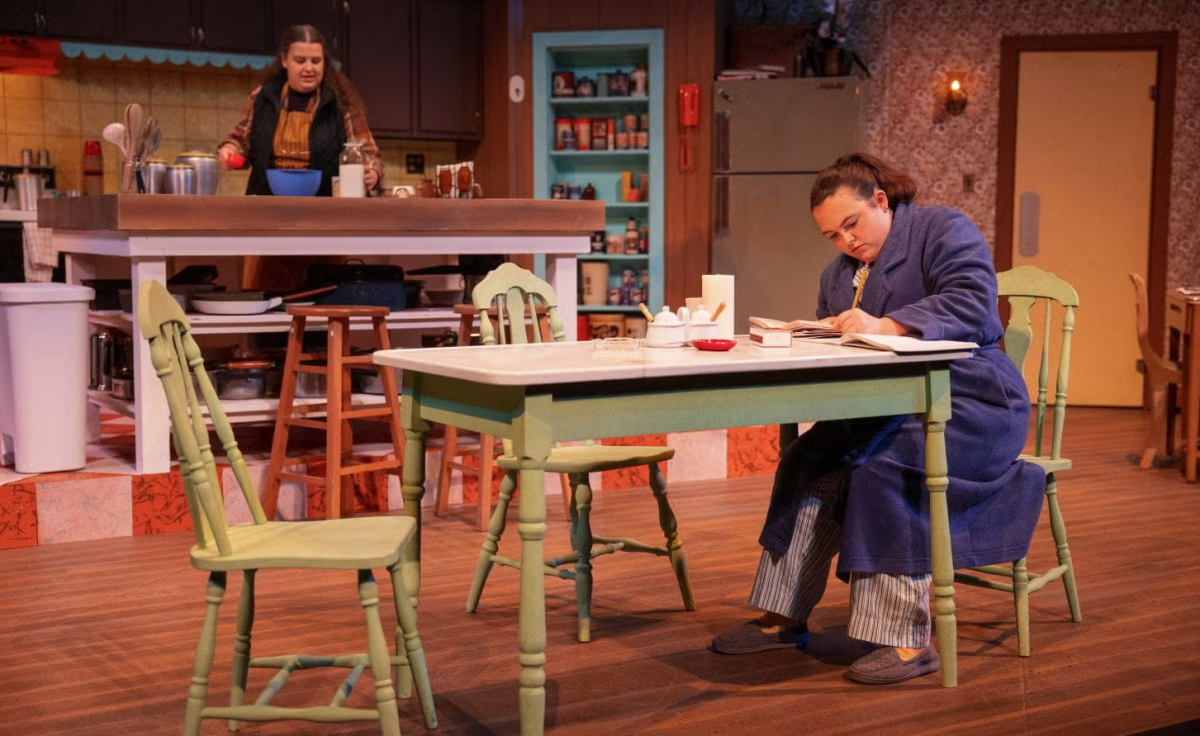
Dore has acted in several productions, but she said one of her favorites has been “When We Were Young and Unafraid” because she felt empowered by the subject matter.
“It was so inspiring because it was during the women’s rights movements. Women were fighting for their rights, so they could become independent,” Dore said. “It was heart-touching to see the inside of what would be like, especially from the setting of a domestic violence shelter.”
Her other favorite production so far has been “Wiley and the Hairy Man,” a Theater Etcetera production where she plays a dog. She said it is fun being able to bark, growl, roll around and jump everywhere on stage.
Learning fundamental skills and enjoying an encouraging environment aren’t the only benefits Dore said the program has given her. She said it has changed her personally by making her a more patient person.
“Some people learn differently, and some people take more time to remember their blocking or remember their lines, so it’s really taught me to be patient,” Dore said. “It’s also taught me to trust the process. You can be so stressed, and you might feel like the show’s falling apart.”
Though the process of setting up a production can be incredibly stressful, Dore said seeing everybody be calm around her helps keep her calm.
Dore also said theater serves a therapeutic role for her by allowing her to step into different identities and leave her comfort zone.
“There’s no rules to theater. Getting out there and getting to step out of yourself and getting to step into that role of someone else, it’s relaxing because in that moment — I’m going to use ‘Young and Unafraid’ for an example — I’m not Bailey anymore. I’m now Penny,” Dore said. “If I didn’t have theater, I would probably be way more stressed and have a full gray head by 30, honestly.”
Actors are only one part of the equation for Marshall Theatre. Behind the scenes, stage technicians work tirelessly to make sure productions have proper lighting, set design, audio, props and more.
Landon Mefford, sophomore production program student, said he came to Marshall’s theatre program because of its long history and its accomplished faculty. Mefford works behind the scenes as a technician for the program and has worked on scene construction, lighting design, prop design and anything else needed for the productions he helps with.
Mefford originally played sports in high school, but after a shoulder injury during a football game, he had to step away from sports. After driving a friend to an audition, Mefford said he started getting involved with theater after having a lifelong interest in it. Since then, he said he’s worked on about 60 shows.
“I liked acting, but on the tech side, it’s something different every day. There’s so many different routes, and for post-graduation, it’s a bunch of different job opportunities,” Mefford said.
Mefford originally wanted to be an actor for Marshall Theatre, but after taking a technical theater class, he said his mind changed.
“I had an intro to technical theater class, and it required you to do practical work,” Mefford said. “I did a practicum for a show we did, and I just slowly started to fall in love with all the different opportunities.”
Mefford said he enjoys the technical side more because it offers something different every day as compared to an actor who has to memorize the same songs and shows.
The busiest moments for a theater technician are the last ten minutes before the show opens, but Mefford said those last few minutes are also often the most exciting.
“It’s stressful, but it’s worth it to see all of your work come together,” Mefford says. “There’s a lot of times where not all of the show’s elements are together and blended until the opening.”
A common theme regarding working in Marshall’s Theatre program is the teamwork and collaboration it requires to make everything go smoothly. Mefford said that’s one of the most valuable skills he’s learned in the program.
“What Marshall does better than a lot of places is that it gives me those experiences. They teach you to be a team player, they show you how to be a leader,” Mefford said. “At Marshall Theatre, you have to have a strong work ethic to be able to be successful. They don’t handle slacking off. You have to be there and be on your game. As our professor Jack says, ‘You have to be Johnny on the spot.’”
Mefford said something that often surprises him is how often people have heard about Marshall Theatre when he travels to national theater conferences. He said it makes him feel proud to be part of the program.
“I’ve always said that we punch above our weight when it comes to production value because we don’t have a graduate program, and a lot of other schools do. That allows our undergraduates to get the design experiences and do it at a high level,” Mefford said. “To be able to be a part of our history, to go to these conferences wearing the Marshall name, to talk about our program and to be able to go to high schools to recruit for Marshall, it makes me proud to be a part of it.”
Marshall Theatre has provided over a century of opportunities for expression and personal development. With this year’s renovations in the Joan C. Edwards Playhouse nearing completion, the Theatre program continues to see changes every year as new generations of actors pass through the program.
Ashton Pack can be contacted at [email protected].