Marshall University has a strong population of international students from all over the world that participate in athletics, academic programming and many other involvement opportunities around campus. Their inclusion in the Marshall family opens Huntington and the university to growth and improvement as the world becomes more globalized.
It is no secret that Appalachia is an isolated region. Within this isolation is an incredible amalgamation of rich history, luscious mountains and an array of cryptids all covered in a layer of southern hospitality. While these features are familiar to residents, however, they can be a shock to international students.
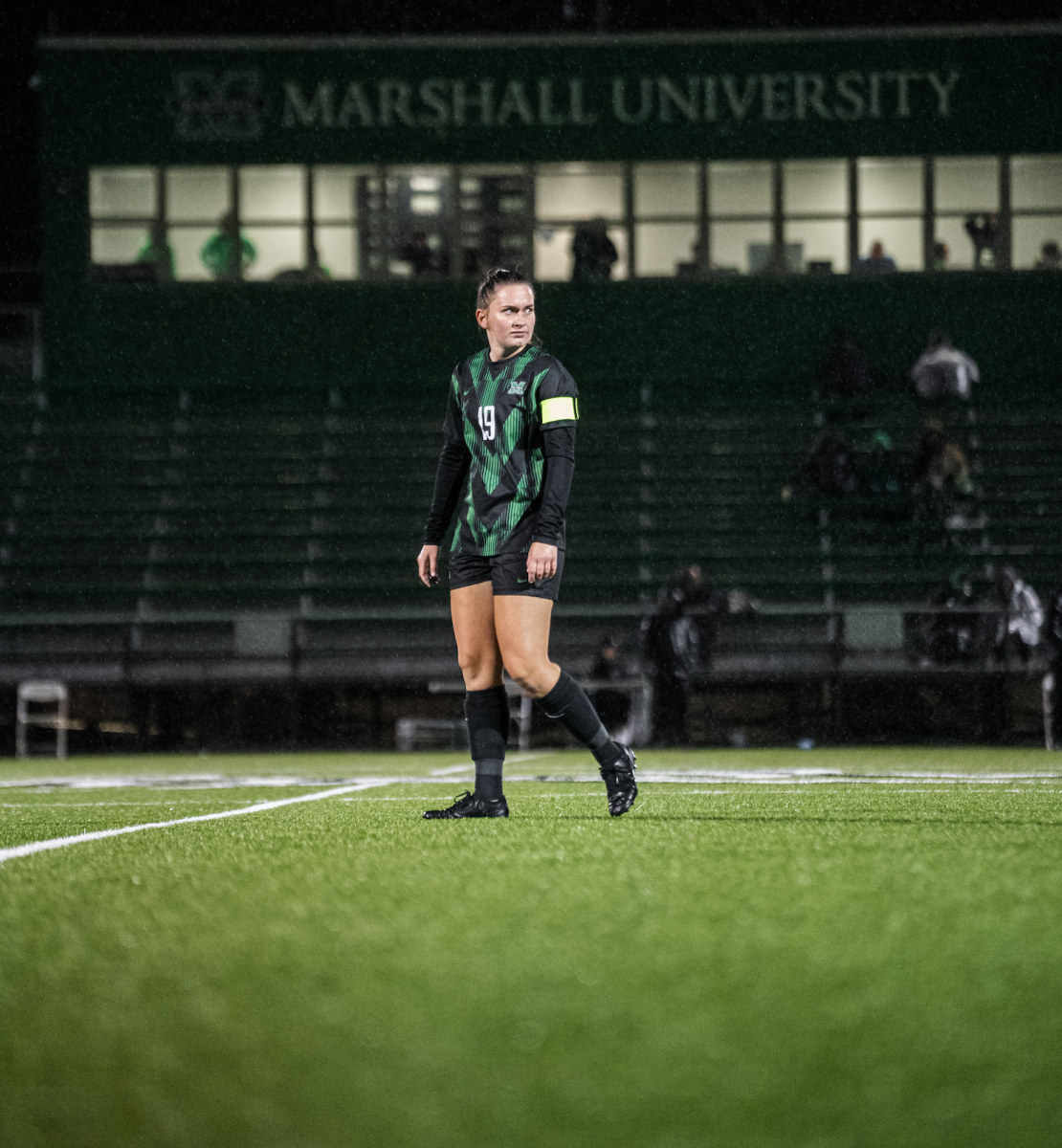
Lea Misch, a member of Marshall Women’s Soccer, traveled from eastern Germany to attend school in West Virginia. After deciding to merge her passions for soccer and academics, moving to the US was her best option.
“Since I play soccer, I wanted to combine soccer and study. It’s not really possible in Germany so I was looking for an option to do both,” Misch said.
Upon arriving in West Virginia, Misch found the southern friendliness of strangers to be a shock.
“I think stereotypically German people are mean and not really open and I think here it’s quite the opposite,” Misch said. “I’m not used to having just short conversations with some people I don’t even know or get to know people that quickly.”
Misch found this openness to be helpful in her transition period because it connected her with more people, especially on her soccer team.
Another cultural adjustment for Misch was her introduction to tipping culture, which is not common to most European countries.
“I get the reason behind it, typically, and I know what’s going on and why,” Misch said about tipping. “But I think that was the biggest change for me since I’ve never been to the US before.”
As the transition to United States and West Virginia culture became easier for Misch, she still held on to some customs from home, including her habit of dressing up when attending classes or other outside events.
“That’s a typical Germany thing,” Misch said. “As soon as you leave the house, it doesn’t matter where you’re going, even if you only go to get groceries … you’re gonna dress kind of nice.”
Despite changing many of her other habits to adjust to American life, Misch’s style is one she is unwilling to sacrifice.
“I think in Germany you get quickly judged. And I think, I don’t know if it’s a positive thing, but I kept doing it here … I think it’s something I’ve grown up with, and I think in my whole closet I have one pair of sweatpants,” Misch said.
As Misch continues her exploration of America and West Virginia, she has been able to lean on the peers and staff at Marshall. One such staff member is Zelideth Maria Rivas, assistant Provost of Global Education is a main source of contact for international students.
“I am … what we call the lead generator. Oftentimes when students are unsure about applying and everything, I am the first person they talk to before they go over to admissions to start their application,” Rivas said.
Her position allows her contact with students as both an initial resource and a continued advisor throughout their years at Marshall.
“I am the default advisor for all international students. They all have their academic advisor … but also, I am the one that … if there’s a problem, academically, or something, I can point them to more resources, or if it’s something that might affect their status in the United States we can push paperwork on that ASAP,” Rivas said.
Rivas is a key resource for students uncertain about transitioning to life in the US, and she receives an array of questions regarding American and campus culture.
“There’s always a lot of questions regarding dormitory life. Not all dormitory life around the world is the same everywhere. What we have is a very American system of dorms,” Rivas said. “So having them understand what the different housing options are and what cost of living in West Virginia is like is also a big thing.”
Through her time with international students and the culture of Marshall, Rivas has been excited about the University’s globalized goals.
“The world that we are teaching Marshall students to live in is a world that is always touched by other countries. Here in West Virginia alone, we have over 20 Japanese companies, some Irish companies, you have LG moving in. Even in different companies, you have international divisions,” Rivas said. “And so being able to listen, and speak from your truth and respect each other, what a gift that is.”