The Sustainability Department at Marshall University is making large strides towards environmental conservation, reducing food insecurity and other developments in job opportunities and economic growth.
Through innovation and leadership by the department’s director, Amy Parsons-White, there have been both local and regional achievements made environmentally.
In 2025 so far, 200 tons of carbon dioxide emissions have been reduced by the department’s efforts in recycling and composting.
The first and only commercial composting facility in West Virginia was designed by the Sustainability Department, which began production in January 2023.
Officials from the federal department Environment and Climate Change Canada flew to Huntington to watch the ribbon cutting ceremony, marking an internationally recognized achievement.
The facility takes various types of waste like food scraps, paper and cardboard to create fertilizer rich with nutrients for plants and vegetation.
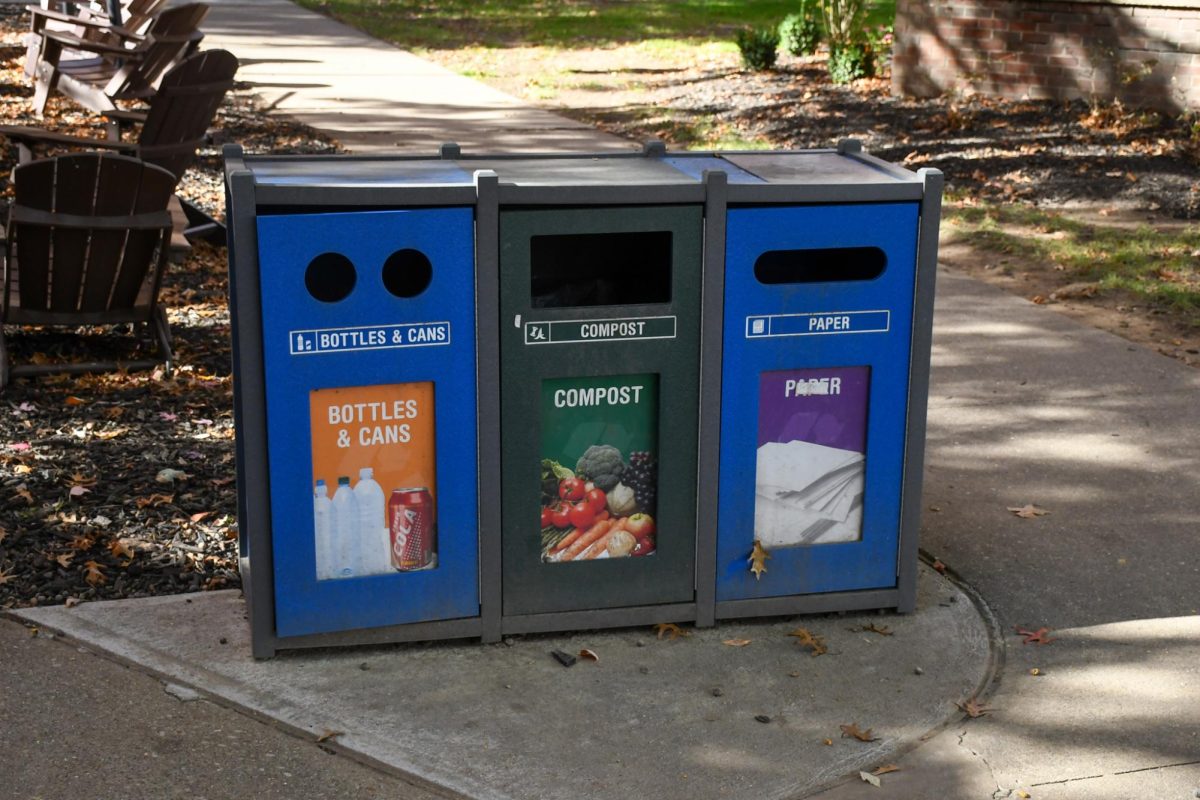
Aside from composting, the recycling efforts around campus have been organized by the department. Students can find garbage bins with different compartments for bottles and cans, paper and food or other waste.
Another project currently being built by the department is a greenhouse that will grow food by an agricultural method called aquaponics. This method of growing food involves using fish waste to provide nutrients to the vegetation.
This method will produce food from about 3,500 different plants with waste from freshwater prawns and will be accessible to all Marshall students.
White said, “The long-term goal is to show people how you can produce a lot of food in a small area.”
The greenhouse will be located near the composting facility at 1010 Norway Avenue, Huntington, with building completion projected to be by the end of November, and food production to begin by February or March of 2026.
White said, “We would like to see (sustainability) spread throughout the state, so that West Virginia can become an agricultural hub and reduce food insecurity.”
The Sustainability Department also has multiple events throughout the school year to raise awareness on environmental conservation, waste reduction and food security.
One of the events is Earth Week, which has various activities leading up to Earth Day. The department hosts workshops, presentations and games that revolve around sustainability.
Earth Day 2026 will be April 22. The full schedule of events has not yet been released, but students will be able to find it on the Sustainability Department’s website under “Earth Week 2026.”
“It’s really a time when we get to reach a lot of people and show them what we do,” White said.
The celebration is open to students and faculty, and all are encouraged to participate to learn more about the work being done by the Sustainability Department.
Davina Snyder can be contacted at [email protected].